Working with short nails requires precision, patience, and a good understanding of product behavior. Many nail technicians focus on shaping and refining long nails but underestimate the importance of structure in short ones. In reality, short nails are more flexible and prone to lifting because they lack a defined free edge and natural support. The goal is to create balanced strength and stability without adding unnecessary bulk.
Understanding the Needs of Short Nails
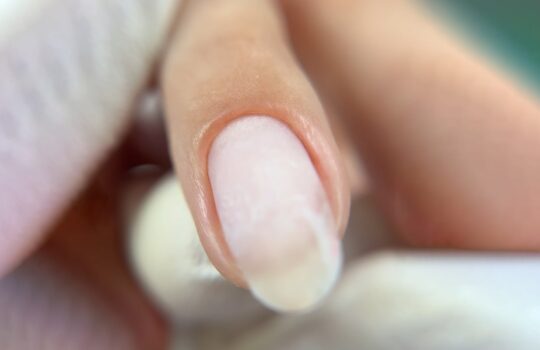
Short nails have limited surface area and reduced leverage for product adhesion. The natural nail plate bends more easily under daily pressure, which can lead to lifting, cracking, or chipping if the wrong material or technique is used. For this reason, hard gel is the best choice when working on short nails. Unlike softer builder gels, hard gels provide a rigid structure that reinforces the nail, giving it strength and support where it naturally lacks flexibility.
Hard gel forms a protective barrier that minimizes the risk of separation between the natural nail and the overlay. It also helps create a defined shape that stays consistent as the nail grows out.
Why Hard Gel Is Preferred for Short Nails
When working with short nails, it is crucial to remember that flexibility is not always an advantage. Soft or builder gels, while easy to self-level, tend to follow the natural bend of the nail plate. On a short nail with no free edge, this flexibility can cause the product to move excessively and separate at the edges, especially in the stress zones.
By contrast, hard gel maintains a firm, stable surface. It compensates for the lack of structure in short nails, allowing the technician to sculpt a solid overlay that protects the nail plate. This prevents premature lifting and ensures long-lasting results.
The Importance of Filing After Overlay
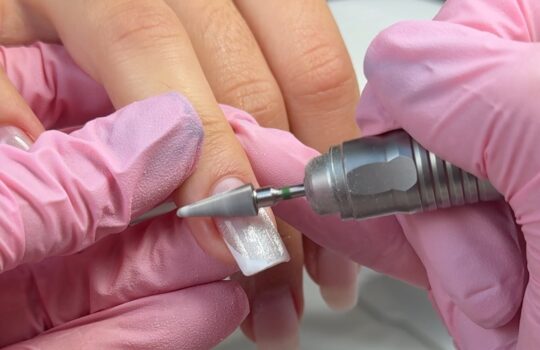
One of the most common mistakes when working on short nails is filing before applying product. Pre-filing reduces the edge thickness even further, which weakens the foundation for adhesion. Instead, professionals should file after completing the overlay.
Once the gel is fully cured, refining the edges helps shape and balance the structure while maintaining the protective thickness at the free edge. Ideally, this thickness should be about 1–2 millimeters, enough to reinforce the tip without adding unnecessary bulk. This method gives the nail the strength it needs to resist lifting and daily wear.
Avoid Over-Thinning the Edges
Over-thinning is another reason short nails fail to hold product properly. When the edges are made too thin, the gel cannot absorb natural movement or impact, leading to micro-cracks and separation. Always ensure that the corners and free edge retain a visible layer of product. This prevents exposure and provides a smooth, strong finish.
The same principle applies when using soft or builder gels — making the edges razor-thin will almost guarantee early lifting. Keeping the product evenly distributed across the nail surface is far more effective for both appearance and durability.
Additional Professional Tips
Use a medium to thick viscosity hard gel to control the product placement and prevent running into the skin.
Always dehydrate and prime the nail surface properly before application to enhance adhesion.
Maintain a small but visible apex to balance strength, even on short nails.
Cap the free edge thoroughly to seal the product and prevent moisture penetration.
Final Thoughts
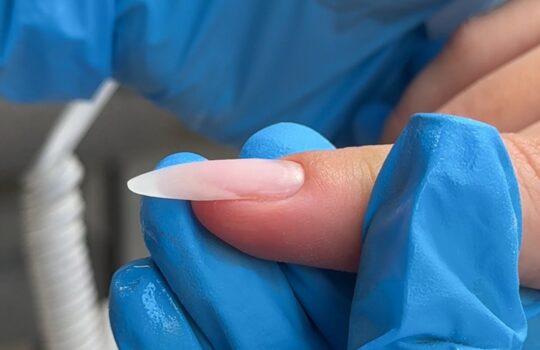
Working on short nails is not about minimizing product — it is about creating intelligent structure and support. Choosing hard gel, filing after overlay, and maintaining a slight thickness at the free edge are key factors in preventing lifting and improving retention.
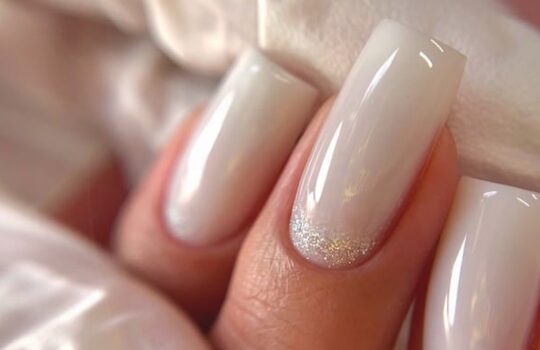
When applied with care and precision, short nails can look refined, professional, and beautifully sculpted. With the right technique and understanding of product behavior, they can be just as durable and elegant as long enhancements.